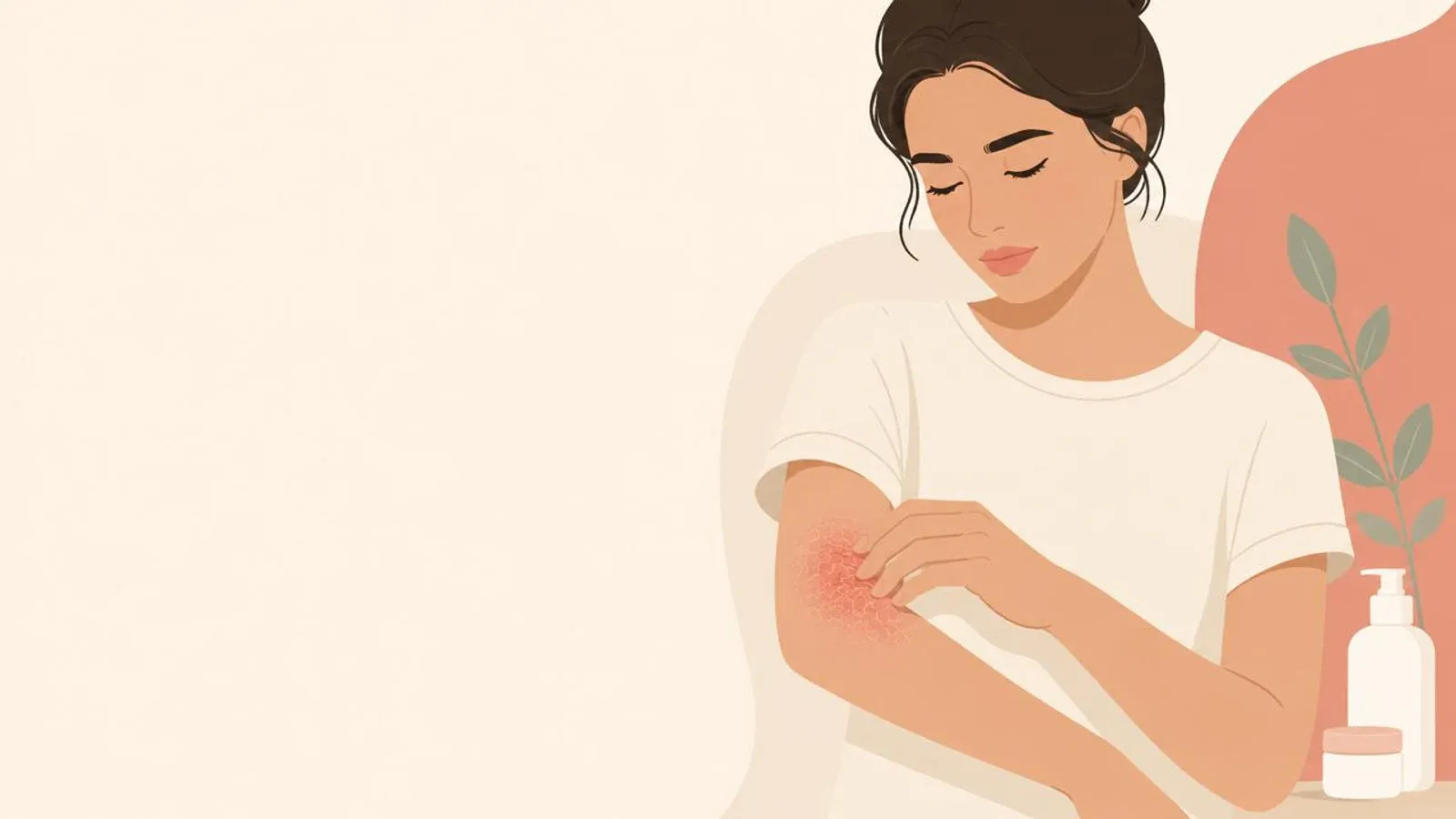
Eczema does not always stay at the same level. Skin may feel relatively settled for a while, then become itchier, drier, more inflamed or harder to manage. That worse period is often called a flare or flare-up.
A flare can follow an obvious change—hot weather, a new soap or a stressful week—but often there is no single answer. Atopic dermatitis involves the skin barrier, immune activity, genes and the environment. Several small factors may overlap, and sometimes symptoms worsen even when you have done nothing differently. The goal is not to control every variable. It is to notice useful patterns, reduce avoidable irritation and know when to ask for help.
This guide focuses on atopic dermatitis, also called atopic eczema. Other conditions are also described as eczema, and their aggravating factors and care needs may differ.
Key takeaways
- A trigger is something that may start a flare or make existing eczema worse; it is not necessarily the underlying cause of eczema.
- Irritating products, dry air, heat, sweat, temperature changes, stress, allergens and infection can matter, but not in the same way for everyone.
- One flare may have several contributing factors—or no clear trigger at all.
- A short, simple log can be more useful than trying to track everything.
- Blistering, pus, leaking fluid, warmth, pain, swelling, sudden worsening or feeling unwell can be signs that prompt medical assessment is needed.
What an eczema flare actually means
The National Institute of Arthritis and Musculoskeletal and Skin Diseases describes atopic dermatitis as a long-lasting condition with periods when symptoms are worse, called flares, and periods when skin improves or clears, called remissions. A flare may bring more itching, dryness, inflammation, cracking, weeping or crusting. It can affect familiar areas or appear somewhere new.
That changing pattern reflects more than what touched your skin that day. The protective skin barrier helps hold in moisture. In atopic dermatitis, changes in that barrier can allow more moisture to escape, contributing to dryness, damage and inflammation. Itching can lead to scratching, which may add more skin damage and increase the risk of infection.
This is why the word trigger needs some care. A trigger may be one piece of the picture, but it is not proof that one product, food or stressful moment caused the condition. It also does not mean a flare is your fault.
Common factors that may aggravate eczema
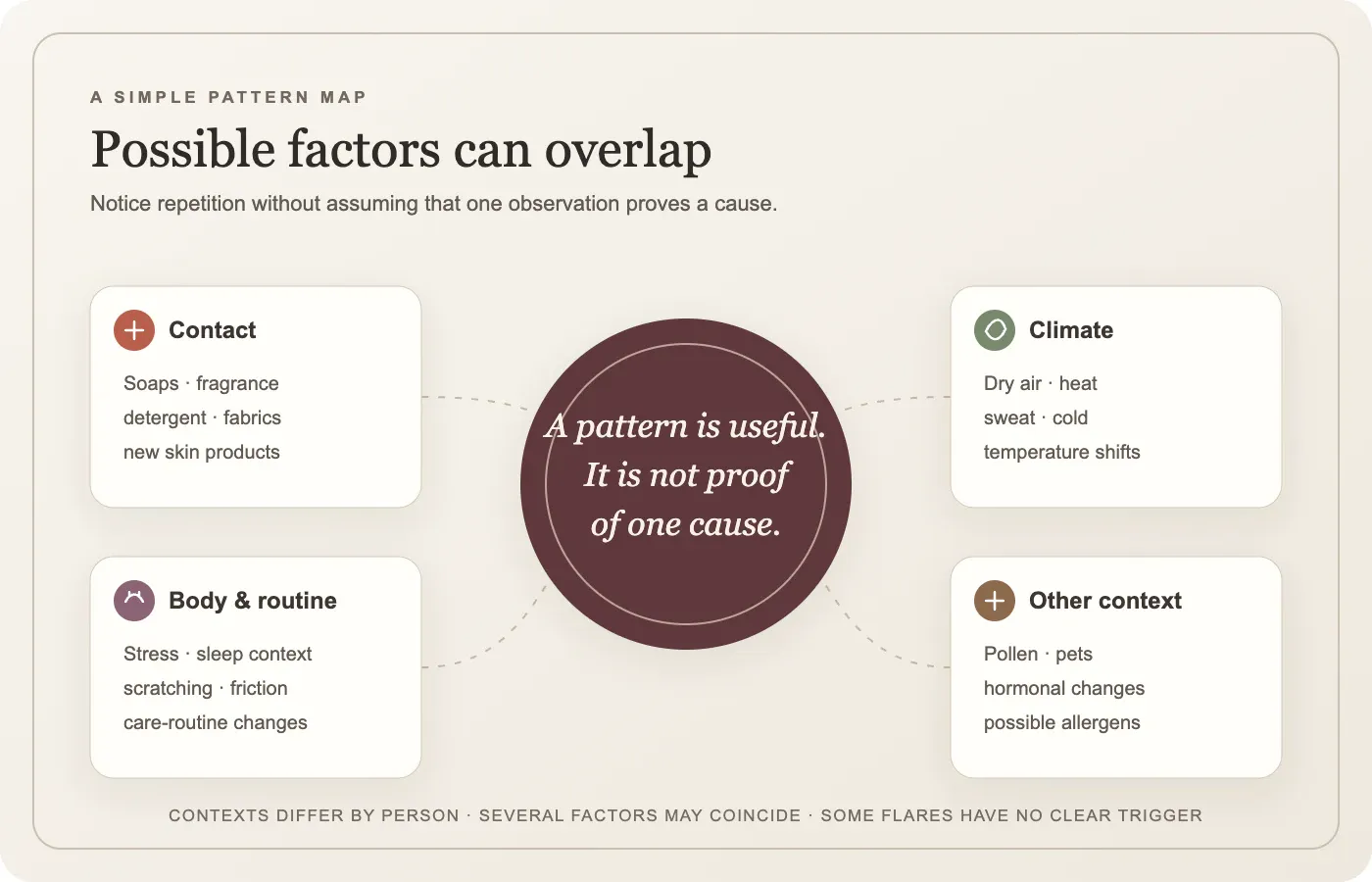
People often have different combinations of aggravating factors. Even for one person, a familiar exposure may matter during one season or stage of life and seem less important during another.
Soaps, fragrances and other contact irritants
Soap, washing detergent, fragrance, some skin products and certain fabrics can irritate sensitive skin. The issue is not always a true allergy. A product may simply be drying, harsh or uncomfortable on already inflamed skin.
If symptoms repeatedly worsen after the same exposure, write it down and return to products that have previously been comfortable. Try not to replace an entire routine at once: changing several products together makes it difficult to tell which change mattered.
Dry air, temperature changes, heat and sweat
Cold or dry air can increase skin dryness. Heat, sweating and sudden temperature changes may also coincide with worsening symptoms. Friction from damp clothing can add another source of irritation.
The pattern may be more informative than the season alone. For example, a flare after exercise could involve heat, sweat, clothing friction and delayed skin care rather than one isolated “exercise trigger.” Practical adjustments—such as changing out of damp clothes and avoiding unnecessary overheating—may reduce irritation, but they cannot guarantee that a flare will stop.
Stress and disrupted routines
Stress is listed as a possible aggravating factor by both the NHS and dermatologist-reviewed American Academy of Dermatology education. That does not make eczema “all in your head.” Stress can overlap with poorer sleep, more scratching or a disrupted care routine, while the discomfort of eczema can itself create stress.
Treat stress as context, not blame. “This was a difficult week and my skin also worsened” is a useful observation. “I failed to stay calm, so I caused this” is neither useful nor fair.
Allergens, pets, pollen and food
The NHS includes pollen, house-dust mites, pets and certain foods among factors that may worsen atopic eczema. But eczema is not always caused by allergy, and a flare alone does not identify an allergen.
Be especially cautious with food. Removing foods without appropriate guidance can create nutritional problems, particularly for children, and improvement or worsening after one meal does not prove cause and effect. If you suspect a repeatable food-related pattern or another allergy, discuss it with a qualified health professional rather than starting a broad elimination diet.
Hormonal changes
The NHS also lists hormonal changes, including during pregnancy, as a possible aggravating factor. If you notice a repeatable pattern, discuss it with a qualified health professional rather than making treatment changes on your own.
A simpler way to look for patterns
You do not need to record every meal, product and emotion indefinitely. Start with a short window—perhaps one or two weeks—and capture only information that could change a decision or help a clinician understand what happened.
| What to note | A simple example | What it cannot prove |
|---|---|---|
| Skin change | “Hands became itchier Tuesday evening” | The diagnosis or exact cause |
| Contact or routine change | “Used a new fragranced hand wash” | That fragrance is an allergy |
| Heat, sweat or weather | “Warm commute; gloves felt damp” | That weather alone caused the flare |
| Stress and sleep context | “Two short nights before symptoms worsened” | That stress is the underlying cause |
| Existing care plan | “Missed usual evening routine” | That one missed step explains everything |
Look for repetition rather than a one-time coincidence. If the same sequence happens more than once, bring that observation—and the products involved—to a clinician or pharmacist. A log is a conversation aid, not a diagnostic test.
What may help during a flare
When symptoms begin to worsen, simple and familiar is usually a better starting point than a complete reset.
- Return to the skin-care or treatment plan already agreed with your healthcare professional.
- Pause a newly introduced product if it seems irritating, while avoiding sudden changes to prescribed treatment without advice.
- Reduce unnecessary heat, sweat or friction when practical.
- Keep nails short and use gentler alternatives to scratching when you can, without treating scratching as a failure of willpower.
- Note what changed, but avoid testing several suspected triggers at the same time.
If flares are frequent, severe, disturbing sleep or daily life, or not responding to the established plan, a professional review can help. The answer may involve improving treatment rather than finding a longer list of things to avoid.
For a broader foundation, read Understanding Eczema: A Source-Grounded Introduction.
When to seek medical help
Arrange prompt medical assessment if eczema becomes blistered, crusted or starts leaking fluid, or if you notice pus-filled spots. Pain, swelling, warmth, rapid worsening, fever or feeling generally unwell can also signal infection or another complication.
Seek routine professional advice when symptoms are difficult to control, the diagnosis is uncertain, you suspect an allergy, or you are considering a major dietary or treatment change. Care pathways differ by country, so use the urgent-care service available where you live.
The useful goal is a clearer pattern—not perfect control
Triggers are worth noticing, but they should not become an endless search for something you did wrong. Eczema is a complex condition, and symptom changes can reflect the skin barrier, immune activity, the environment, treatment needs and everyday life at the same time.
A small number of repeatable observations can make appointments and care decisions more useful. If no clear pattern appears, that is information too. It may mean the next step is better clinical support—not more restriction.
Sources
- National Institute of Arthritis and Musculoskeletal and Skin Diseases — Atopic Dermatitis (last reviewed November 2022)
- NHS — Atopic eczema (last reviewed September 6, 2024)
- American Academy of Dermatology — Eczema Resource Center (scope reference; no review date displayed)
- American Academy of Dermatology — Childhood eczema: Triggers can cause eczema to flare (pediatric scope)
Source note: The AAD childhood-trigger source was used only for examples that remain labeled as child-focused in the evidence ledger. AAD states that its eczema content was solely developed by the organization and acknowledges support from Sanofi and Regeneron.
This article provides general educational information and is not a substitute for diagnosis or individualized advice from a qualified healthcare professional.